A Major Piece of Oak Island History
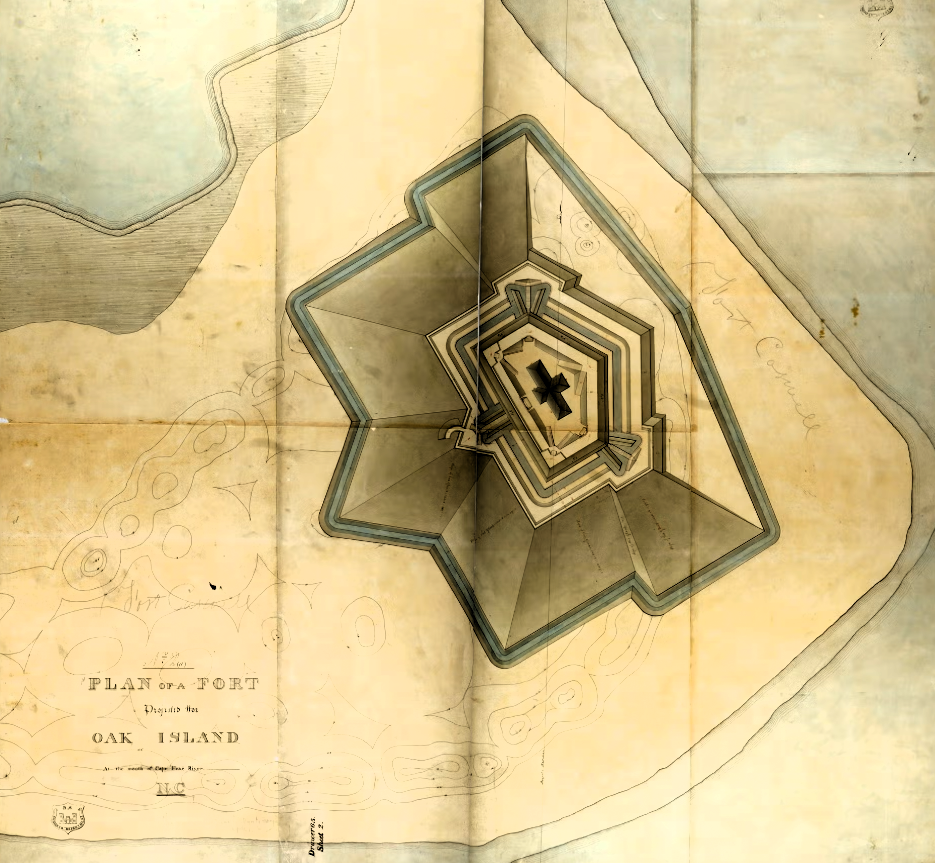
Fort Caswell is one of the most historically significant places on the North Carolina coast. North Carolina historical records describe it as a masonry fort constructed by the U.S. Army Corps of Engineers between 1826 and 1838 as part of a national coastal-defense system. The Fort Caswell Historic District nomination states the original fort was completed in 1836 at a reported cost of $473,402.
That history did not begin with its current owner. The National Register nomination says the War Assets Administration sold the property to the Trustees of the North Carolina Baptist State Convention on September 17, 1949, for $86,000. Baptist sources also state that the Baptist State Convention purchased Fort Caswell in 1949 for $86,000.
Today, the site remains historically important and formally recognized. The Fort Caswell Historic District was added to the National Register of Historic Places in 2013, and the nomination describes a large district containing buildings, structures, and fortifications tied to more than a century of American military and coastal history.
Fort Caswell’s Present-Day Value
Brunswick County tax records list Fort Caswell’s 2025 assessed value at $78,618,360. Assessed value is not the same as market sale price, but it does show the scale of the property’s present-day tax valuation. This is a striking contrast with the site’s 1949 sale price of $86,000.
Can the Public Visit Fort Caswell?
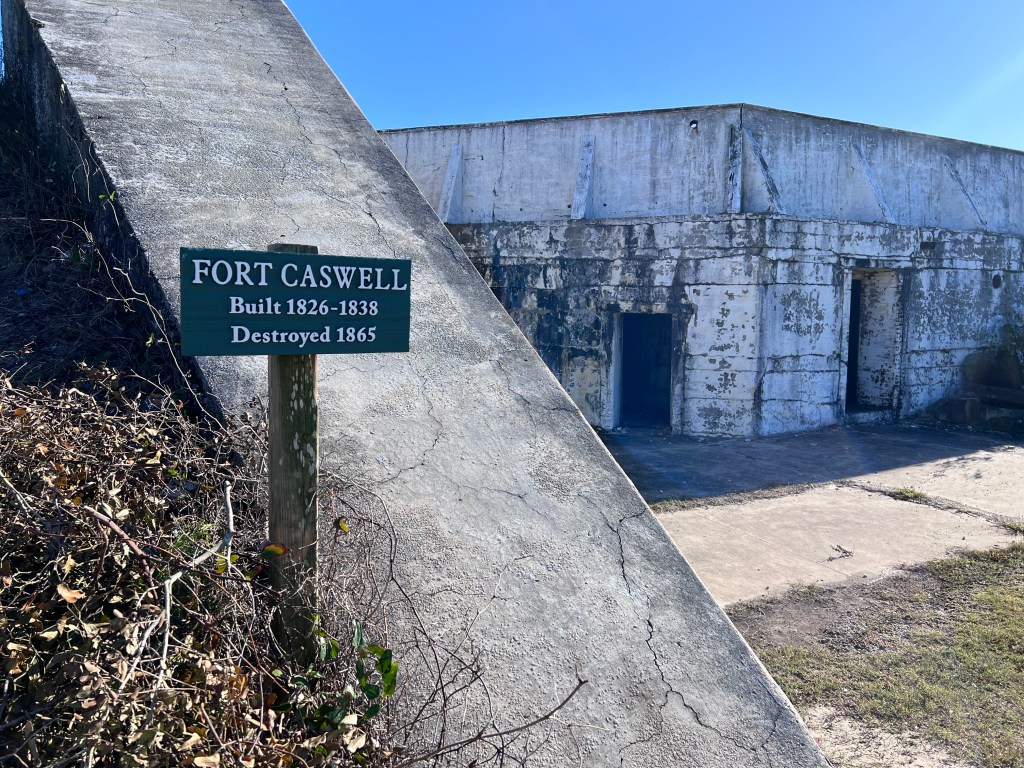
Public access to Fort Caswell does exist, but only in limited and conditional ways. Fort Caswell’s official reservations page says the public may be able to visit through campus drive-throughs, grounds passes, or special events on days when there are not large groups or children on campus. The same page says visitors should call the week they want to visit to check availability, and it notes that the campus is closed to public visitors from the beginning of June through the first half of August due to summer camp.
That means Fort Caswell is not operating like a regularly open public historic site. It is a privately controlled property with limited public visitation determined by campus scheduling. Fort Caswell’s website also presents the site as a retreat and conference center, with reservations, lodging, and paid programming.
A Different Public Model Across the Water
Just across the Cape Fear River, Fort Fisher offers a useful point of context. Fort Fisher is operated as Fort Fisher State Historic Site by North Carolina Historic Sites, and its official visitor page lists regular hours of Tuesday through Saturday, 9 a.m. to 5 p.m. with free general admission.
That contrast does not prove wrongdoing. It does, however, show two very different models of stewardship. One major coastal fort is privately owned and open only when conditions allow. Another major coastal fort nearby is publicly managed and open on a regular schedule.
A Former Federal Fort Can Take Different Paths
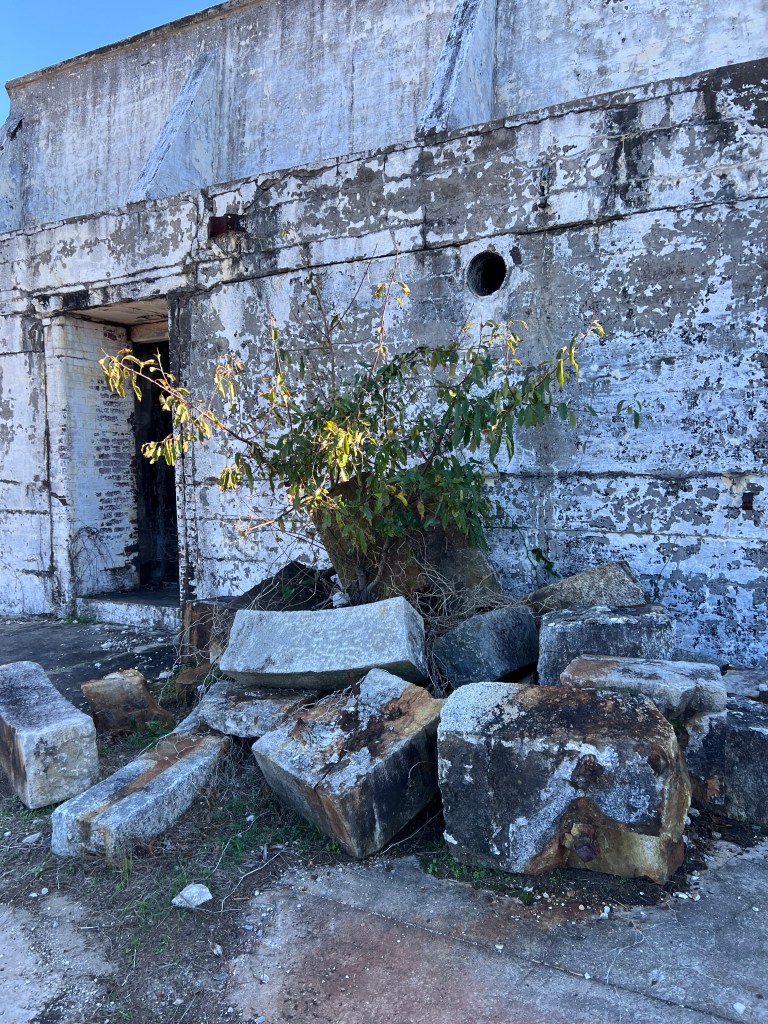
Based on the examples we were able to identify, Fort Caswell appears to be a rare case: a historically significant property built with federal funds that later passed into private ownership. In our research, we found only three other roughly comparable examples in the United States, underscoring how unusual Fort Caswell’s situation appears to be.
Beaufort County says Fort Fremont in South Carolina was sold to private interests in 1930 and later purchased by Beaufort County in 2005 for use as a county park. County preservation materials describe that acquisition as a $5.4 million purchase.
That history does not dictate what should happen at Fort Caswell, but it does show that broader public access to a federally built fort is not an impossible idea.
Who Owns Fort Caswell — and Who Owns Its History?
There is also a broader institutional story here. The Baptist State Convention of North Carolina owns the property today, but Fort Caswell’s historical significance long predates that ownership. The fort was federally built in the 19th century and only later entered private religious ownership in 1949.
That distinction matters. Legal ownership of the property is not the same thing as ownership of the site’s historical meaning. Fort Caswell is part of Oak Island’s story, North Carolina’s story, and the broader public history of the American coast.
The Financial Structure Around the Current Owner
The Baptist State Convention of North Carolina’s Executive Committee endorsed a $30 million Cooperative Program budget for 2026, and the convention’s budget materials say it continues a 50/50 split of undesignated Cooperative Program funds between global ministry partners and North Carolina ministries.
The public record makes the broad outline of that funding model clear, but not the full ledger. The IRS says churches and conventions or associations of churches are among the religious organizations that are excepted from annual Form 990 filing requirements. ProPublica’s nonprofit database says the Baptist State Convention of North Carolina is not required to file because the IRS designates it as a church.
A related financial arm, Provision Financial Resources of NC Baptists, reported $187.2 million in assets under management as of December 31, 2023. The same annual report says Provision distributed $7,423,699 in 2023, awarded 123 scholarships totaling $199,950, and made 50 special ministry grants totaling $103,823. Based on those published figures, total reported distributions were about 4.0% of assets under management, while the specifically identified scholarships and ministry grants were about 0.16% of assets under management. Those percentages are simple calculations from the organization’s own reported numbers.
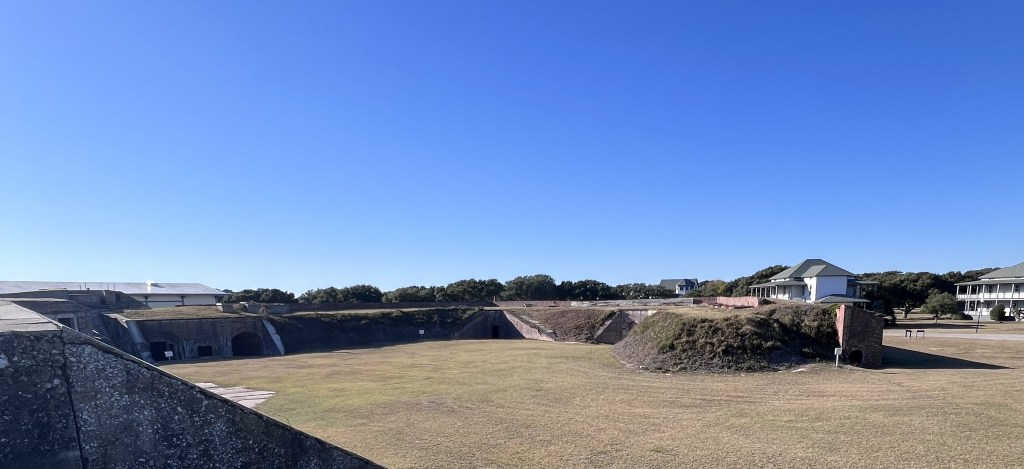
Fort Caswell as an Operating Venue
Fort Caswell also appears to function as a meaningful revenue-generating facility inside that larger ecosystem. Its public-facing site promotes year-round retreats, lodging, conferences, and recurring paid events. Public pricing on the events page shows retreat rates such as $187 per person for Spring Senior Adult Retreats, indicating that the site is not simply preserved land but an active operating venue. Baptist State Convention materials also list Fort Caswell among its conference centers.
Why This Matters
None of this proves illegality. But legality is not the only question that matters for a place like Fort Caswell. Fort Caswell was built with federal money, served the country for generations, and remains part of North Carolina’s public historical record. The Baptist State Convention of North Carolina may own the property, but it did not create the history that makes Fort Caswell matter.
That is why this conversation matters. The real question is not just who controls Fort Caswell on paper. The larger question is how a place with such deep public history should be stewarded, interpreted, and experienced today.
At Cycle-logical Tours, we believe local history should be explored honestly, including the uncomfortable parts. We believe the public deserves clear information about how places change hands, how access is shaped, and how power operates around local landmarks. Fort Caswell is a major piece of Oak Island’s story, and that story did not begin in 1949.
The Baptist State Convention of North Carolina may own the Fort Caswell property, but Fort Caswell’s history belongs to the broader public story of this coast.
We believe shining light on overlooked history is part of serving this community.
Sources
- North Carolina DNCR, “Fort Caswell (D-8)” — federal construction history and significance.
- National Register nomination for Fort Caswell Historic District — district details, sale date, and sale price.
- NC Baptist, “A Mighty Fortress” — Baptist purchase history and background.
- Fort Caswell reservations page — public access rules and visitation options.
- Fort Caswell main site — retreat and conference center positioning.
- Fort Fisher plan-your-visit page — hours and public admission.
- Beaufort County Fort Fremont page — private sale history and county park acquisition.
- Fort Fremont preservation source — $5.4 million acquisition reference.
- NC Baptist 2026 budget article — Cooperative Program budget approval.
- NC Baptist budget materials — 50/50 split details.
- IRS guidance on churches and conventions/associations of churches.
- ProPublica Nonprofit Explorer entry for the Baptist State Convention.
- NC Baptists Annual Report 2023 — Provision assets, distributions, scholarships, grants.
- Fort Caswell events page — paid retreat programming examples.
- NC Baptist conference centers page — Fort Caswell listed as a conference center.
 Cycle-logical Tours
Leave a comment